
System Design Manuals Overview
System design manuals serve as foundational guides, outlining methodologies, standards, and best practices for engineering complex systems. They integrate regulatory requirements, technical specifications, and lifecycle management, ensuring consistency and quality across projects. It helps!!!!
Definition and Role in Engineering
A system design manual is a structured document that codifies the principles, processes, and standards engineers use to conceive, develop, and validate complex systems. It distills lessons from past projects, regulatory frameworks, and industry best practices into a single reference that guides teams from concept through deployment. The manual defines the scope of responsibilities, the sequence of design activities, and the interfaces between functional subsystems. It also establishes quality metrics, risk assessment protocols, and documentation requirements that ensure traceability and compliance with safety, performance, and cost objectives. By providing a common language and a shared set of expectations, the manual reduces ambiguity, aligns stakeholder goals, and facilitates early detection of design trade‑offs. In practice, it serves as a living artifact that evolves with new technologies, standards, and lessons learned, enabling continuous improvement across the engineering lifecycle. The role of the manual is therefore both prescriptive—setting the rules of engagement—and descriptive—capturing the knowledge that drives innovation and reliability in engineering projects worldwide. The manual also incorporates cross‑disciplinary viewpoints, ensuring that mechanical, electrical, software, and human factors engineers collaborate seamlessly. It outlines decision‑making frameworks, such as trade‑off matrices and risk matrices, that help teams quantify the impact of design choices. The manual also provides a framework for continuous improvement, integrating lessons learned into future projects to enhance system resilience and operational excellence and safety

NASA Systems Engineering Handbook
The NASA Systems Engineering Handbook compiles mission-critical guidelines for spacecraft design, integrating risk assessment, verification, and validation processes. It emphasizes iterative development, cross-disciplinary collaboration, and rigorous documentation to ensure safety, reliability, success!.
Key Chapters and Their Significance
NASA’s handbook is organized into distinct sections that map the entire systems engineering lifecycle. Chapter 1 establishes the foundational concepts of systems engineering, stressing the importance of stakeholder engagement and requirements traceability. Chapter 2 focuses on the early concept and technology development stages, guiding teams through feasibility studies, risk assessments, and technology maturation plans. Chapter 3 details the preliminary design phase, outlining the creation of system architecture, functional decomposition, and interface definition. Chapter 4 covers the detailed design and verification activities, emphasizing rigorous test planning, analysis, and validation against mission objectives. Chapter 5 addresses the implementation and integration process, providing best practices for subsystem integration, configuration management, and quality assurance. Chapter 6 discusses the launch, operations, and decommissioning phases, ensuring that system performance is maintained throughout the mission life cycle. Each chapter is enriched with case studies, checklists, and illustrative diagrams that illustrate real-world applications, thereby bridging theory and practice for engineers at all levels. The handbook’s structured approach ensures that complex aerospace projects remain on schedule, within budget, and meet stringent safety and reliability standards. It is updated to reflect lessons from missions, ensuring engineers have guidance for design and verification!!!.
ASHRAE Air-Conditioning System Design Manual
The ASHRAE Air‑Conditioning System Design Manual, second edition, offers guidance for HVAC design. It includes SI units, revised references, and updated illustrations, ensuring consistency with industry standards. The manual aids engineers in creating efficient, reliable systems for all users.
The second edition of the ASHRAE Air‑Conditioning System Design Manual underwent comprehensive revisions to enhance clarity, accuracy, and usability for HVAC professionals worldwide. The revision process meticulously edited all textual content, ensuring consistency with current industry practices and regulatory requirements. A key update involved the systematic incorporation of SI units across the entire manual, replacing legacy imperial measurements and aligning the document with international standards. This transition facilitates seamless integration of the manual into global design workflows and improves interoperability with modern simulation tools. Additionally, the manual’s reference list was expanded and updated, incorporating recent research findings, updated codes, and contemporary best‑practice guidelines. Illustrations throughout the text were redrawn and refined to reflect the latest system configurations and component technologies, providing clearer visual guidance for engineers. The revision also introduced new sections on sustainability metrics, energy efficiency calculations, and lifecycle cost analysis, reflecting the evolving priorities of the HVAC industry. Overall, the updated manual offers a more precise, user‑friendly resource that supports designers in delivering efficient, compliant, and environmentally responsible air‑conditioning solutions. The manual’s adoption has accelerated the shift to greener HVAC solutions, with design teams citing its SI‑centric approach as a catalyst for integrating renewable energy and controls. Training workshops and certification programs now reference the updated text, ensuring emerging engineers grasp both theory and practical implementation. Its guidance aids compliance with building codes, boosting project credibility now!

Carrier System Design Manual
Carrier’s design manual, archived on Internet Archive, offers detailed HVAC guidelines, component specs, and installation procedures. The PDF (v0.0.23) updates schematics, performance curves, and compliance checks, aiding engineers in efficient system design. It also includes safety standards and.!
Application in Mobile Communication Infrastructure
Carrier’s System Design Manual, available through the Internet Archive, contains detailed specifications for HVAC and environmental controls that are critical in mobile communication sites. The manual’s updated schematics, performance curves, and compliance checklists enable engineers to design robust cooling solutions for base‑station equipment, ensuring optimal temperature and humidity levels. By integrating these guidelines, telecom operators can reduce equipment failure rates, extend asset life, and maintain service reliability. The manual also addresses power distribution, redundancy, and fault tolerance, which are essential for uninterrupted network operations. Additionally, it provides best‑practice recommendations for airflow management, heat‑sink selection, and ventilation strategies tailored to dense antenna arrays. Implementing Carrier’s design principles in mobile infrastructure projects leads to lower operational costs, improved energy efficiency, and compliance with industry safety standards. The comprehensive approach supports both new deployments and retrofits, allowing operators to upgrade legacy sites without compromising performance. Overall, the manual serves as a practical reference for designing resilient, efficient, and scalable cooling systems that meet the demanding requirements of modern mobile communication networks. By following these guidelines, engineers reduce downtime, cut maintenance costs, and boost network resilience, ensuring robust, future‑proof mobile infrastructure!!!!!!

System Design Fellowship Program Overview
Program in System Design is a comprehensive, work‑experience based course aimed at developing in‑demand tech skills for software developers. It blends theory, hands‑on projects, mentorship, assessments to prepare graduates i architecure the design!
Curriculum and Career Impact
The System Design Fellowship Program offers a structured curriculum that blends theoretical foundations with practical application. Students begin with core modules covering systems architecture, requirements engineering, and design patterns, ensuring a solid grasp of the discipline’s fundamentals. Subsequent units focus on advanced topics such as scalability, fault tolerance, and performance optimization, providing depth for aspiring senior developers. Throughout the program, participants engage in hands‑on projects that mirror real‑world challenges, allowing them to apply concepts in context and receive iterative feedback from industry mentors. Assessment is continuous, featuring code reviews, design critiques, and peer collaboration, which cultivates critical thinking and communication skills essential for leadership roles. The fellowship’s career impact is substantial: graduates report accelerated promotion trajectories, higher salary brackets, and increased opportunities to lead cross‑functional teams. Employers value the program’s emphasis on both technical rigor and soft‑skill development, leading to a strong placement record across technology firms. Additionally, alumni benefit from an extensive network of former participants and partners, facilitating mentorship and job referrals. Overall, the curriculum is designed to produce well‑rounded system designers capable of driving innovation and managing complex product lifecycles. Engineers gain confidence to tackle new challenges.

Computer Programming: System Design Handbook
This handbook bridges theory and practice, detailing object‑oriented design principles, and best practices for scalable code. It offers step‑by‑step guidelines and coding patterns to help developers create robust,fully maintainable systems.
Object-Oriented Design Principles
Object‑oriented design (OOD) is a cornerstone of architecture, emphasizing layers. The manual delineates the four primary principles—encapsulation, abstraction, inheritance, and polymorphism—explaining how each contributes to codebases. Encapsulation is presented as the practice of bundling data with the methods that operate on that data, thereby protecting internal state from unintended modification. Abstraction is highlighted as the process of exposing only features while hiding details, enabling developers to work with interfaces rather than logic. Inheritance is described as a mechanism for creating new classes based on existing ones, promoting code reuse and establishing hierarchy. Polymorphism is illustrated through method overriding and interface implementation, allowing objects to be treated interchangeably based on contracts.
The handbook further integrates SOLID guidelines—Single Responsibility, Open/Closed, Liskov Substitution, Interface Segregation, and Dependency Inversion—to reinforce decisions. Each SOLID principle is accompanied by concrete examples, best‑practice recommendations, and common pitfalls to avoid. Design patterns such as Factory, Singleton, Observer, and Strategy are catalogued with intent, applicability, and implementation snippets, providing a toolkit for solving challenges. The text also covers architectural styles, including layered, microservices, and event‑driven approaches, and discusses how OOD principles can be adapted to fit each paradigm.
Throughout, the manual stresses the importance of iterative refinement, peer review, and automated testing to validate intent. By combining foundations with guidance, it equips developers and architects with the knowledge to create systems that evolve over.?!

Industry Standards for System Design Documentation
IEEE and ISO standards guide documentation, ensuring clarity, traceability. They prescribe templates, terminology, and review processes enabling stakeholders to verify requirements, assess risks, and maintain consistency across projects.
IEEE and ISO Guidelines
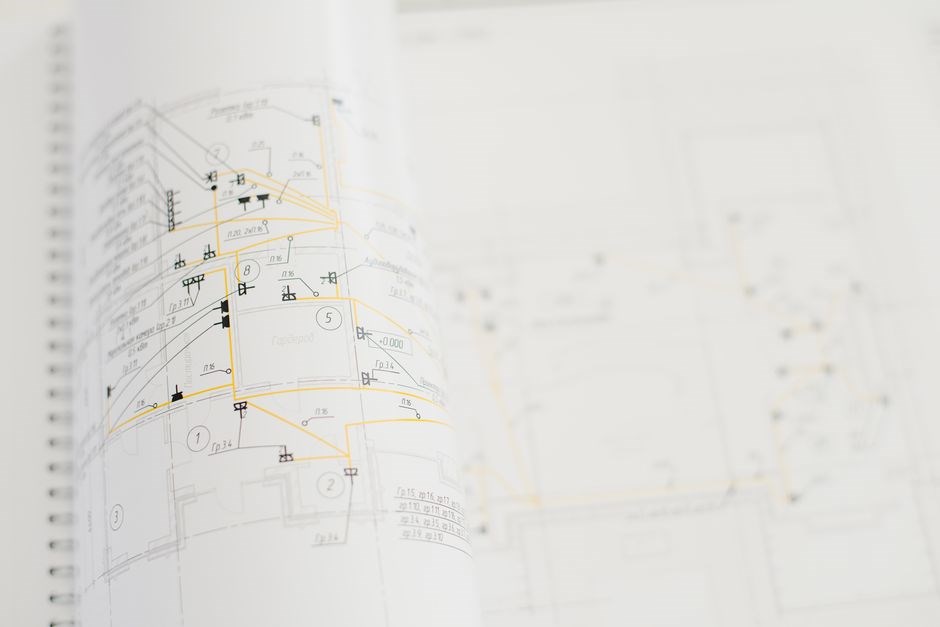
IEEE and ISO standards form the backbone of system design documentation, offering a structured approach that balances technical rigor with practical applicability. The IEEE 1220 series, for instance, focuses on system life cycle processes, ensuring that each phase—from concept through disposal—has clear objectives, deliverables, and verification criteria. Complementing this, ISO/IEC 15288 provides a comprehensive framework for system life cycle management, detailing processes such as requirements analysis, architecture design, integration, and validation. Together, these standards promote consistency across disciplines, enabling engineers to align functional, performance, and safety requirements within a unified documentation scheme. They also prescribe the use of traceability matrices, risk assessment tables, and configuration management plans, which are essential for maintaining integrity throughout the system’s evolution. By adhering to these guidelines, organizations can achieve higher levels of compliance, reduce rework, and facilitate stakeholder communication, ultimately leading to more reliable and maintainable systems.
These guidelines are widely adopted in aerospace, automotive, and telecommunications industries, ensuring that complex systems meet safety, reliability, and performance criteria. By following IEEE and ISO frameworks, teams can systematically document architecture, interfaces, and test plans, thereby reducing ambiguity compliance audits.

Best Practices in System Design Manual Creation
Adopt modular templates, enforce version control, peer review, and traceability. Use consistent nomenclature, diagrams, and checklists. Automate generation with scripts, integrate CI pipelines, and archive revisions in a central repository. Ensure compliance with IEEE/ISO. Track revisions daily.? Follow a rigorous review cycle.!

Version Control and Review Processes
Adopt a distributed VCS (Git, Mercurial) to manage every manual revision. Store each version in a dedicated branch and tag releases with semantic identifiers (MAJOR.MINOR.PATCH). Commit messages must reference design decisions, issue IDs, and stakeholder approvals to preserve traceability.
Integrate continuous‑integration pipelines that trigger on pull requests. The pipeline should run static analysis, linting, and unit tests on embedded code snippets, and generate a diff report. Reviewers annotate the diff; a minimum of two approvals is required before merging, ensuring rigorous scrutiny.
Maintain a structured change log that links each entry to its corresponding issue tracker ticket, design‑review minutes, or regulatory requirement. This traceability matrix supports audits and future designers in understanding the manual’s evolution.
Schedule formal reviews quarterly for high‑impact documents and semi‑annual for standard procedures. Use a checklist aligned with IEEE 1220 and ISO 9001 to verify diagrams, terminology, and references remain current. Capture risk assessments and user feedback during each review.